
Glad You Asked #5 - Would your team know what to do in the first hour of a crisis?
Or would they just be “figuring it out”..?
You learn crisis management the same way you learn to swim. Not from a book. By getting in the water, swallowing some of it, and figuring out how to keep your head up.
Early in my corporate legal career, I participated in my employer's annual simulation to test how management handled real pressure. I knew it was coming. I just didn't know when.
One morning at 8am, my phone beeped: crisis team, assemble now.
The scenario was brutal: a truck carrying our product had hit a school bus. Other employees played the CEO, regulators, police, emergency services. It felt as real as it could without anyone getting hurt. And I was absolutely drained by the end of it, but I've never been so thankful for on-the-job training.
The Real Deal
Six months later, my phone beeped again. 4:30pm on a Friday. This time it wasn't a drill.
A real incident at a regional manufacturing site, run by a third party we'd outsourced to, but some of our employees still worked in. Our team assembled the way we'd trained for, including people who had to travel in from interstate.
The regulators were there within hours, and I sat through harrowing interviews supporting colleagues over the weekend. The team was methodical, working under immense stress because it was long-term colleagues directly impacted.
I will never forget any of it. And I've never felt prouder of a team in my professional life.
The Aftermath?
The large multinational third party running that site had no coherent response for 36 hours.
We did. Because we'd practised being uncomfortable before it mattered. Never assume anyone else is prepared. We'd allocated roles based on how people responded under stress, before they ever needed to be tested for real.
Stress does weird things to competent people. In a crisis, you don't want to discover you have the wrong people in critical roles. But simulations don't remove the stress of a crisis. They just mean you're not learning basic coordination while it's happening.
You Don't Get to Choose When It Happens
In every legal role after this, I ran crisis simulations too. When real ones hit, those lessons were tested:
a flooded server room and a physical data backup located in a major European capital
a workplace fatality
a major workplace fraud
What if someone is away, has recently left, is on a plane, or is part of the crisis itself? What is the contingency?
The same applies to your legal and WHS obligations. Don't learn what you should have known during a crisis.
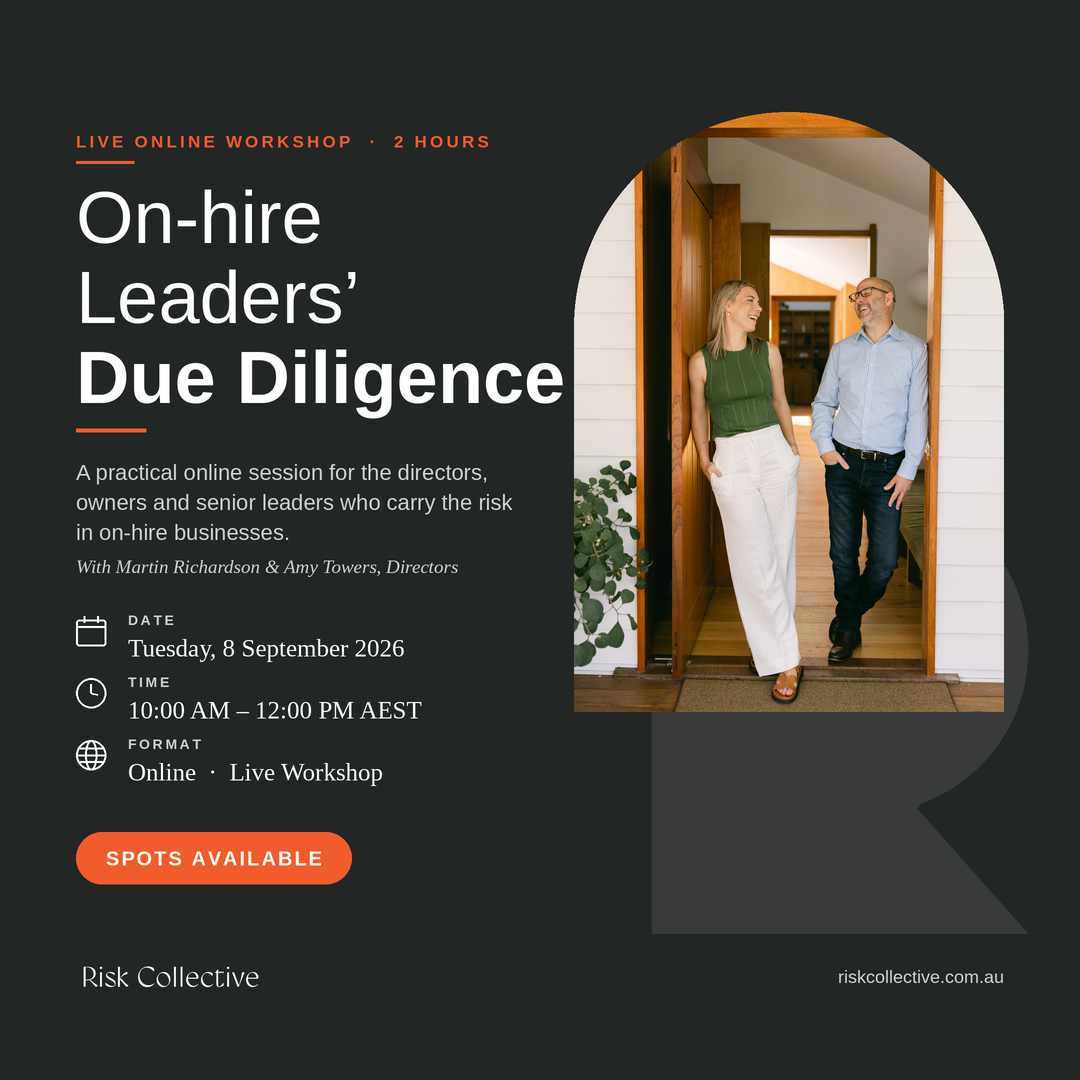
That's exactly why we're running Leaders’ Due Diligence on 8 September: a 2-hour online workshop for directors, owners and senior leaders in on-hire businesses. We'll cover WHS and legal risk, personal liability, contract risks, and the practical steps to protect your business.
You never get to choose when a crisis happens. But you can choose whether your team is ready for one.